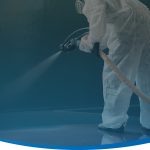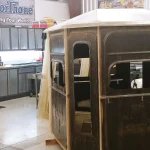

Mastering polyurea hunting blind coating application is one of the most valuable skills a custom blind builder can add to their operation. If you’ve been building hunting blinds for any length of time, you already know that materials and construction quality matter — but the coating inside the blind can make or break the entire setup for every hunter who uses it. Over the past few years, polyurea has quietly become one of the most talked-about coating solutions in the custom blind world, and for good reason. The challenge is that spraying polyurea isn’t like rolling on a can of flat black paint. It requires real training, the right equipment, and an understanding of the material itself.
This guide is written specifically for blind builders — fabricators, custom shop owners, and anyone who wants to add professional-grade polyurea application to their skill set. We’ll walk through the basics of what polyurea is, why it matters for hunting blinds, how to get trained properly, what gear you’ll need, and the step-by-step approach to doing your first application correctly.
Why Polyurea Hunting Blind Coating Works So Well
Before you spend time and money getting trained on any coating system, it’s worth understanding exactly what makes polyurea a better choice than traditional paints or rubberized spray coatings for this specific application.
The interior of a hunting blind has a demanding set of requirements. It needs to be non-reflective — any surface glare or light bounce inside the blind can catch a deer’s eye at exactly the wrong moment. It needs to be durable enough to hold up against gear being dragged in and out, rifle rests, bow holders, and the general abuse that comes with hard use season after season. It needs to handle condensation and moisture without peeling, bubbling, or harboring mold. And it needs to do all of that without off-gassing a scent that alerts game to your presence.
Polyurea checks all of those boxes in ways that cheaper alternatives simply don’t. It cures fast — sometimes in seconds — which matters for production environments and for applying in less-than-ideal temperatures. It bonds exceptionally well to wood, metal, and most composites that blind builders commonly work with. Once cured, it forms a seamless, flexible membrane that won’t crack when the wood moves with humidity changes. When applied correctly with the right pigment mix, it produces a flat, matte finish that kills interior reflections dead.
For a deeper look at why the interior coating choice matters from a hunter’s perspective, this resource from Polyurea Nation breaks it down well: why the coating inside your hunting blind matters more than you think. Reading that before you train will give you a better appreciation of what you’re trying to achieve for your customers.
Understanding Polyurea Chemistry: What Blind Builders Need to Know
You don’t need a chemistry degree to spray polyurea, but you do need a working understanding of how the material behaves. That knowledge directly affects how well your applications turn out.
Polyurea is a two-component system. Component A is the isocyanate side, and Component B is the resin blend — typically a mix of amine-terminated polyols and chain extenders. When these two components are combined at high pressure and temperature inside a plural-component spray gun, they react almost instantaneously to form the finished coating. This is fundamentally different from single-component coatings or even two-part epoxies that need time to cure at room temperature.
The reaction speed is both polyurea’s biggest advantage and the thing that makes it unforgiving for untrained applicators. You have a gel time measured in seconds. If your surface isn’t prepped properly, if your temperatures are off, or if your ratio is wrong, you won’t get a second chance to fix it before the material sets. This is why training isn’t optional — it’s essential.
There’s also an important distinction between pure polyurea and polyurea-polyurethane hybrids. For hunting blind interiors, the slower reaction time of a hybrid can actually be useful if you’re doing detailed work around brackets, hinges, or window frames. Pure polyurea is faster and generally more durable but demands more precise technique. Your training provider should walk you through both and help you identify which system fits your specific workflow.
Finding the Right Polyurea Training Program
The polyurea industry has matured significantly over the last decade. There are now formal certification programs, manufacturer-led training courses, and hands-on workshops that can take someone from zero knowledge to a competent applicator in a matter of days. The key is finding a program that covers both the technical theory and the practical, hands-on spraying experience.
Look for training taught by applicators with real field experience — not just people who understand the chemistry in a lab setting. The best programs will put you behind a gun on day one and have you spraying practice substrates before you’re halfway through the course. Theory without application time is worth very little when you’re trying to get consistent results on a blind panel.
Manufacturer-sponsored training is often the best starting point. If you’re planning to use a specific product line, the manufacturer’s certified training gives you hands-on time with the exact material and equipment you’ll be using in production. Many manufacturers also offer ongoing technical support after training, which matters a lot when you hit your first real-world problem.
Industry organizations like the Polyurea Development Association (PDA) also offer certifications that carry weight with commercial customers. While hunting blind builders may not need formal PDA certification to get started, completing one of their programs signals to contractors and customers that you take the craft seriously.
Equipment You’ll Need to Spray Polyurea on Hunting Blinds
Getting into polyurea application means getting into plural-component spray equipment, and that’s a significant investment. The equipment category is one of the main reasons why proper training matters so much — a $15,000 or $20,000 spray rig operated incorrectly will produce bad results at best and become a safety hazard at worst.
The core piece of equipment is the plural-component proportioner. This machine heats both components to the required application temperature (typically between 140°F and 160°F) and pumps them to the spray gun at a precise 1:1 or 1:2 ratio by volume, depending on the specific product. The proportioner also maintains the pressure needed to atomize both components simultaneously in the gun’s mixing chamber.
The spray gun itself is a high-pressure impingement mixing gun, not a standard HVLP or airless spray gun. The two components meet inside the gun’s mixing chamber, not in an external pot. This means the gun doesn’t need cleaning between passes — when you pull the trigger, fresh material mixes and fires. When you release, the gun purges automatically. This design is part of what makes polyurea fast and clean to apply once you’re comfortable with the equipment.
Beyond the proportioner and gun, you’ll need a dedicated air supply capable of maintaining consistent pressure, heated hoses to keep the material at temperature from the machine to the gun, and proper PPE including a supplied-air respirator, chemical-resistant gloves, and full body coverage. The isocyanate component in polyurea is a respiratory sensitizer — this is non-negotiable safety equipment.
Surface Preparation: The Step Most Beginners Skip
If there’s one area where training consistently makes the biggest difference, it’s surface prep. Polyurea bonds extremely well to properly prepared surfaces, but that bond is only as good as the surface you’re bonding to. A poorly prepped panel will delaminate — sometimes months after the job looks perfect — and that creates a warranty nightmare and a reputation problem.
For wood panels, which are the most common substrate in hunting blind construction, proper prep means ensuring the wood is dry. Most polyurea systems have moisture tolerance specs, but you want to be well within those tolerances rather than right at the edge. If you’re working in a humid climate or with green lumber, moisture readings matter. A simple pin-type moisture meter is a cheap tool that prevents expensive failures.
Surface profile also matters. Raw wood that’s been lightly sanded to open the grain gives polyurea something to grip mechanically, not just chemically. For metal substrates like steel panels or aluminum framing, the standard approach is abrasive blasting to a near-white metal finish, followed by immediate primer application before oxidation can start. Even inside a shop environment, bare metal can develop flash rust within hours in humid conditions.
Primers and tie coats deserve their own conversation. Many polyurea systems perform significantly better over the correct primer — some require a primer for proper adhesion, others benefit from it but don’t require it. Your training program should dedicate real time to this topic because the primer choice affects everything downstream. Skipping primer might save fifteen minutes on the first job and cost you a complete recoat on the third one.
Application Technique for Hunting Blind Interiors
Once your surface is prepped and your equipment is dialed in, the actual spraying of a hunting blind interior follows a specific process that experienced applicators develop through practice. The goal is a uniform, consistent mil thickness with no holidays (missed areas), no runs, and an even matte texture throughout.
Gun distance and speed are the two variables you’ll spend the most time learning to control. Too close and you build up excessive film thickness, which can trap outgassing and cause bubbling. Too far and you get overspray and poor film integrity. Most applicators find their rhythm at a consistent distance of eight to twelve inches from the substrate and a steady, measured stroke speed. Your training provider will give you specific parameters for the product you’re using — treat those parameters as your starting point, not your ceiling.
For hunting blind interiors specifically, the corners and seams deserve extra attention. These are the areas most prone to delamination and the areas where moisture most often finds a way in. Many experienced applicators do a detail pass on all corners and interior angles before doing the main field coat, then follow up with the field coat while the detail pass is still in its green cure window. This technique creates a seamless connection between the corner treatment and the flat surface coating.
Color matters more in hunting blinds than in most other polyurea applications. Flat black is the default interior choice for good reason — it absorbs light rather than reflecting it — but some builders offer a dark olive or dark earth option for customers who prefer a slightly warmer tone. Regardless of the color choice, the pigment loading and the matte finish agent in the formulation need to be consistent. Inconsistent pigment dispersion creates hot spots and uneven sheen that a deer’s eyes can pick up in low light.
Exterior Polyurea Coatings: Different Goals, Same Discipline
Most of the training that applies to interior coating also applies to exterior work, but the performance goals are different. The exterior of a hunting blind needs to shed water, resist UV degradation, withstand mechanical abrasion from brush and branches, and hold color and camouflage pattern through years of exposure. Polyurea handles all of this exceptionally well, but the formulation you use on the exterior is typically different from your interior product.
UV stability is the key differentiator for exterior coatings. Standard aliphatic polyurea formulations resist UV degradation much better than aromatic systems. For hunting blinds that will spend years outdoors, specifying an aliphatic top coat over an aromatic basecoat is a common approach that balances cost with long-term performance. Your training program should cover this distinction because it directly affects which products you recommend to customers and how you price exterior coating jobs.
Camouflage texturing is another advanced polyurea hunting blind coating technique that some blind builders add to their offering. By manipulating spray distance, pass speed, and material temperature, an experienced applicator can create a textured finish that breaks up the surface profile and adds visual camo interest beyond what color alone can achieve. This takes additional practice beyond basic application training, but it’s a high-value differentiator if you’re building custom blinds for premium customers.
Setting Up Your Shop for Polyurea Application
Training teaches you the technique. Setting up your shop correctly determines whether that technique is even possible to execute consistently. There are a few non-negotiables for anyone bringing polyurea application in-house.
Ventilation is first. Polyurea overspray contains isocyanates, and you cannot operate in a poorly ventilated space. A proper spray booth with adequate air exchange per hour is the right setup. If a full spray booth isn’t in your immediate budget, at minimum you need forced-air ventilation that creates positive pressure out of the space, keeping overspray from recirculating. Your local OSHA regulations will have specific requirements — know them before your first spray day.
Temperature control matters almost as much as ventilation. Most polyurea systems have a substrate temperature minimum of around 40°F to 50°F and perform best when both the substrate and the ambient temperature are above 60°F. Cold substrates cause adhesion problems and surface defects. If you’re in a cold climate, your shop needs to be heated during application and the panels need time to come up to temperature before you spray.
Storage for your A and B components also needs attention. The isocyanate side is moisture-sensitive — any exposure to atmospheric moisture before application will affect the material quality. Components should be stored in sealed containers in a temperature-controlled environment, and opened drums should be used promptly or resealed with dry nitrogen blanket gas to prevent moisture ingress.
Quality Control After Polyurea Hunting Blind Coating Application
Knowing how to apply polyurea correctly is one skill. Knowing how to evaluate whether you’ve applied it correctly is a separate and equally important one. Good training programs teach both.
Wet film thickness gauges and dry film thickness gauges are basic quality control tools that every polyurea applicator should own and use. Most hunting blind interior applications target a dry film thickness in the range of 30 to 80 mils, depending on the formulation and the performance goals. Running a thickness check on your first passes and adjusting your technique accordingly will save you from under-application (which fails early) and over-application (which wastes material and can cause surface defects).
Visual inspection under raking light is another basic technique that’s easy to do and catches most common defects before the coating is fully cured. Holidays, thin spots, and texture inconsistencies all show up clearly under a light source held at a low angle across the surface. If you catch a problem while the coating is in its green cure window, a touch-up pass often bonds seamlessly. If you catch it after full cure, the repair process is more involved.
Adhesion testing is the last piece of the inspection process that matters for quality work. A simple cross-hatch adhesion test using standard tape will tell you whether your bond to the substrate is solid or whether you have an adhesion issue that needs to be addressed before the blind ships. Building this test into your quality control process protects your reputation and catches problems before they become customer complaints.
Common Mistakes First-Time Polyurea Applicators Make
Training reduces the learning curve significantly, but there are a handful of mistakes that new applicators tend to make regardless of how good their instruction was. Being aware of them going in helps you catch them faster when they start happening.
The most common one is skipping or rushing surface prep because the material seems to bond to everything. Polyurea does bond well to a wide range of substrates, but “bonds well” and “bonds correctly” aren’t the same thing. Contaminated surfaces, inadequate surface profile, and moisture issues all lead to delamination failures that show up weeks or months later — long after the job has left your shop.
The second most common mistake is not maintaining equipment properly between uses. Polyurea spray equipment is precision machinery. Clogged mix chambers, worn tip seals, and dirty filters all affect material quality and ratio accuracy. Developing a rigorous post-application cleaning and inspection routine for your equipment is part of what separates professional applicators from people who get inconsistent results.
The third mistake is not keeping good records. Tracking which products you used, at what temperatures, on what substrates, with what primer system gives you a reference point when something goes wrong or when a repeat job needs to match a previous one exactly. It also gives you documentation if a warranty question ever comes up.
Adding Polyurea Coating as a Revenue Stream for Your Blind Business
For blind builders who are already producing quality work, adding professional polyurea coating capability creates a meaningful competitive advantage and a genuine revenue opportunity. Customers who currently paint their own blinds or use consumer spray coatings will pay a real premium for a professionally coated blind that performs better, lasts longer, and looks more polished.
The equipment investment is real — expect to spend anywhere from $5,000 on entry-level equipment to $20,000 or more for a commercial-grade proportioner — but the margin on polyurea application is strong once you’re efficient with the material. Material cost per square foot is reasonable, application time per blind is manageable with a practiced workflow, and the finished product commands significantly higher pricing than traditionally painted blinds.
Custom blind builders who have added polyurea coating to their offering consistently report that it becomes one of their most talked-about features among customers. Hunters who understand what they’re looking at recognize quality coatings, and word-of-mouth in hunting communities is powerful. If you’re building blinds that are better than anything else in the market and you have the coating skills to prove it, the business case takes care of itself.
For builders who want to understand the full range of polyurea products available for this type of application, American Polyurea offers professional-grade polyurea coating systems designed for exactly these kinds of demanding applications. Having a reliable supply relationship with a quality manufacturer makes a big difference in production consistency.
Getting Ongoing Support After Initial Training
Training is the beginning, not the end. The best applicators keep learning — through manufacturer technical bulletins, industry forums, conversations with other applicators, and their own ongoing experimentation. The polyurea industry moves, and formulations, equipment, and best practices evolve over time.
Building relationships with your material suppliers is one of the most underrated aspects of getting good at polyurea application. Technical reps at quality manufacturers have seen every problem you’re likely to encounter. They can help you troubleshoot issues, recommend formulation adjustments for specific applications, and let you know when new products come out that might serve your blind-building workflow better than what you’re currently using.
Online communities and trade associations are also valuable, particularly for builders who are in markets where there aren’t many other polyurea applicators to learn from in person. The Polyurea Development Association has resources and events that connect applicators across the industry, and there are active online groups where working applicators share techniques and troubleshoot problems together.
For builders looking to get a broader education on polyurea applications across different industries, resources from American Polyurea’s training program offer structured learning paths that go well beyond hunting blinds and provide context for understanding where this material excels in other demanding coating environments.
Is Polyurea Hunting Blind Coating Training Right for You?
Adding polyurea application to your blind-building operation isn’t a casual undertaking, but it’s also not as complicated as the learning curve might suggest going in. Thousands of applicators across dozens of industries use this material every day, in far more demanding environments than the inside of a hunting blind. The training programs are good, the equipment works reliably when maintained properly, and the finished product speaks for itself.
What separates the applicators who get great results from the ones who struggle is almost always the same thing: they took the training seriously, they set up their workspace correctly, and they didn’t skip the prep work. If you go in with that mindset, you’ll produce blinds that hunters notice, remember, and tell their friends about.
The hunting blind market is competitive, and differentiation matters. A professionally applied polyurea hunting blind coating — done right, with the proper materials and technique — is one of the clearest ways to separate a premium blind from a commodity one. That’s a good place to be.