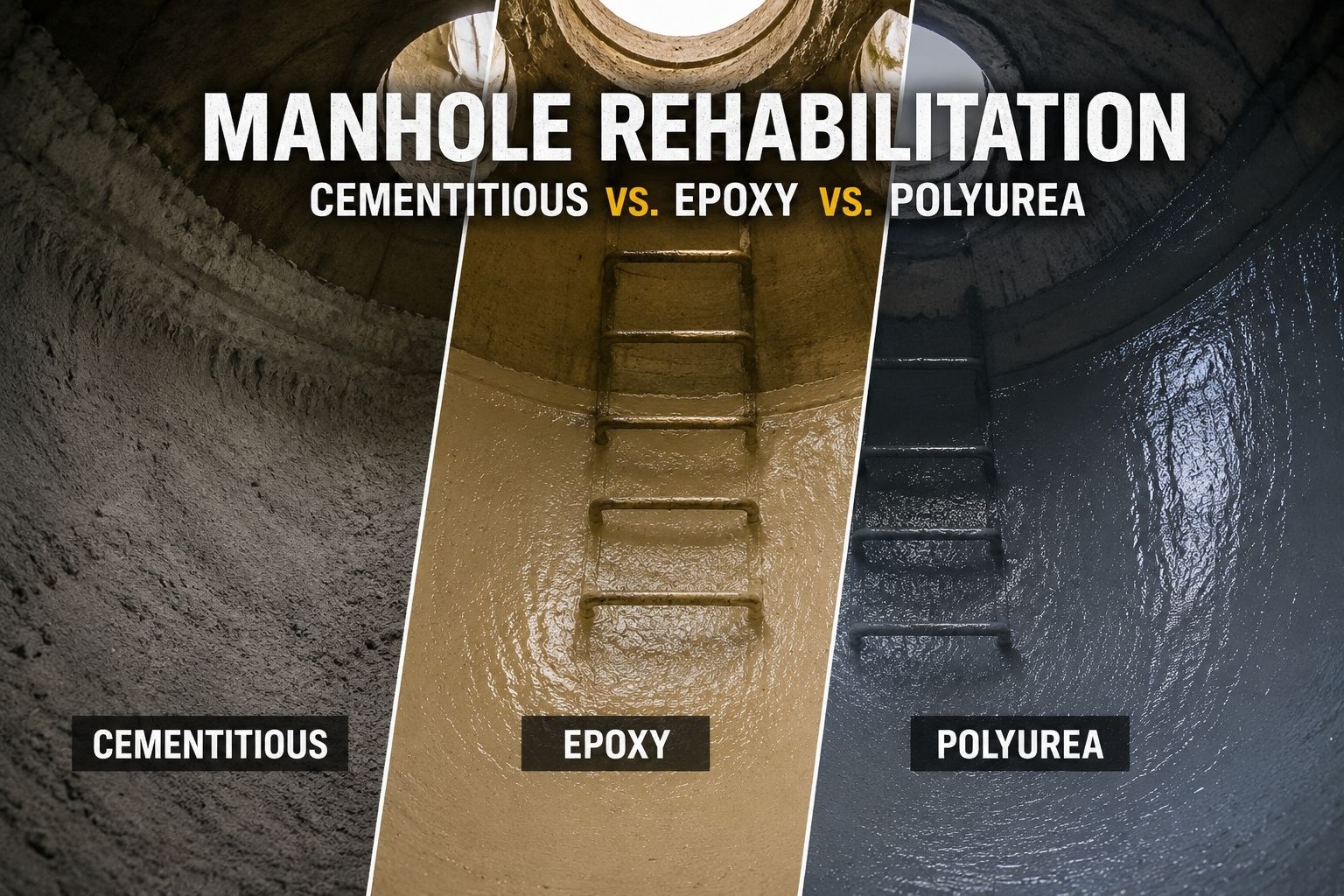


Polyurea has become a preferred protective coating in industries that demand durability, flexibility, and fast cure times. As demand has grown across construction, infrastructure, mining, and industrial sectors, a distribution network has developed to move polyurea raw materials and spray equipment from manufacturers to applicators throughout the United States.
How the Polyurea Supply Chain Works
Polyurea coatings are typically sold as two-component systems — an isocyanate (A-side) and a resin blend (B-side) — that are kept separate until the moment of spray application. These components are manufactured in bulk by chemical companies and then distributed either directly to applicators or through regional distributors who carry inventory for faster local delivery.
Some manufacturers operate direct-to-applicator programs where contractors order product and equipment through the manufacturer’s own network. Others work through independent distribution channels, which can give applicators access to multiple product lines and more competitive pricing. Both models are active in the U.S. market.
Regional Availability and Logistics
Polyurea material availability varies by region. Applicators in dense industrial corridors — the Gulf Coast, the Midwest, and the mid-Atlantic — generally have more local distribution options than those in rural areas. Drum and tote shipments of A and B components typically move by LTL freight, and storage requirements (temperature-controlled for the resin side) affect logistics planning for distributors and applicators alike.
Spray equipment — the proportioners, heaters, hoses, and spray guns required for high-pressure polyurea application — is typically purchased separately from the coatings materials. Equipment manufacturers and distributors operate independently from coating material suppliers in many cases, though some manufacturers sell or lease both.
Finding a Supplier Near You
Applicators sourcing polyurea materials should compare: product technical data sheets (elongation, tensile strength, hardness, chemical resistance), pricing per volume at expected usage levels, minimum order requirements, lead times, and the technical support available from the supplier. Industry trade shows such as the Spray Polyurethane Foam Alliance conference and regional coatings events are useful venues for meeting multiple suppliers and comparing products firsthand.
American Polyurea covers supplier and distribution information as part of our ongoing industry resources. We encourage readers to request samples and technical data from any supplier before committing to a product line.
Related Resources
Understanding the distribution chain is part of making informed purchasing decisions. Our guide on where to buy polyurea and our article on where to buy polyurea near you translate supply chain knowledge into practical sourcing guidance. For quality comparisons between domestic and international sources, read Quality Matters: Comparing Polyurea Production in America and China.
For contractors starting or growing a polyurea business, understanding the supply chain covered in this article is foundational to building strong supplier relationships. Our guide to starting a polyurea coating business covers sourcing decisions in the context of overall business planning. Questions about sourcing and purchasing are also addressed in our Polyurea FAQ.
Get polyurea news in your inbox
New articles, application guides and industry news from American Polyurea. Unsubscribe anytime.