

Ask anyone who has spent this July walking bin rows instead of scrolling their phone, and they will tell you something a little strange has happened: grain bin rust prevention has gone viral. Farm Facebook groups are swapping before-and-after photos of recoated bins. Agronomy accounts are reposting warnings about corrosion before harvest. Even industry press releases are urging producers to check their bins before the combines roll. It is an unusual thing for a maintenance topic to catch fire online, but here we are.
The reason is simple once you look at it closely. A rusted grain bin is not just an eyesore sitting out by the driveway. It is a slow leak of profit, a safety liability waiting for the wrong moment, and increasingly, a problem farmers are documenting in real time for anyone willing to watch.
Why Everyone Is Suddenly Talking About Grain Bin Rust
Scroll through enough farm equipment groups this month and a pattern emerges. Someone posts a photo of a bin base eaten through by rust, and the comments fill up fast: recommendations for sealants, arguments over hot rubber versus spray-applied coatings, and more than a few stories about a bin that failed at the worst possible time. Add in a run of local news segments about grain-handling accidents this season, and pre-harvest maintenance has become one of those rare farm topics that crosses over from trade publications into everyday conversation.
None of this is really new information for anyone who has owned a bin for more than a decade. What is new is the timing. Corrosion that farmers used to patch quietly in the off-season is now something people talk about publicly, before harvest, while there is still time to actually do something about it.
How a Grain Bin Actually Starts to Rust
Galvanized steel is tough, but it was never meant to be invincible. Bins fail in a handful of predictable ways, and once you know what to look for, the rust stops feeling like bad luck and starts looking like basic chemistry.
Condensation and Temperature Swings
Grain sweats. As temperatures swing between a scorching afternoon and a cool night, moisture migrates and condenses on the coolest surface it can find, which is usually the inside wall of the bin. Over a few seasons, that repeated wetting and drying eats through galvanizing from the inside out, in a spot no one checks until grain quality suffers.
Fertilizer Residue and Chemical Exposure
Bins that double for fertilizer, treated seed, or even just a quick rinse-out after a wet harvest see a different kind of wear. Salts and chemical residue cling to the base ring and floor seams, and that combination accelerates corrosion far faster than plain moisture alone. It is usually the base of the bin, not the roof, that gives out first.
Seams, Bolts, and Structural Stress Points
Every bolt head, lap seam, and weld is a place where the factory coating is thinnest to begin with. Add years of expansion and contraction as the bin fills and empties, and those same points become the first places rust takes hold. It rarely stays cosmetic for long once it starts at a stress point.
The Real Cost of Waiting
A little surface rust rarely ends the conversation there. Left alone, it works toward pinholes, and pinholes let in moisture that spoils grain from the outside edge inward. Spoiled or out-of-condition grain gets docked at the elevator, sometimes badly enough to erase whatever the recoat would have cost several times over.
Then there is the structural side of it. A base ring or stiffener weakened by corrosion changes how a bin handles the load and wind stress it was engineered for. That is exactly the kind of failure point behind the collapse and entrapment videos that keep circulating this season, and it is a big part of why safety-minded farmers are treating rust as more than cosmetic.
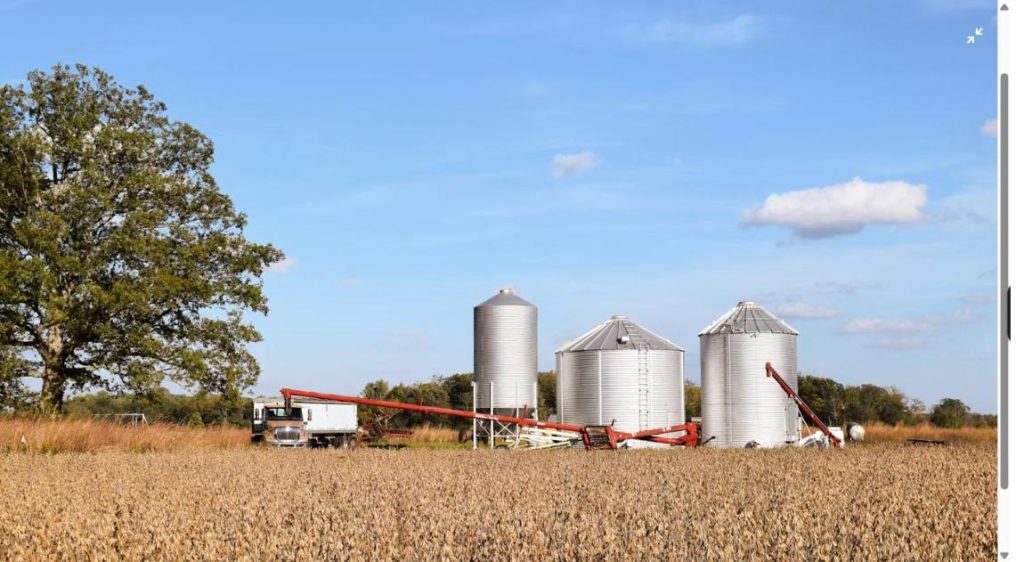
Why Polyurea Keeps Coming Up in the Conversation
Paint fades. Asphalt-based sealants stay soft and pick up dust and residue. Hot rubber works but takes real skill and time to apply evenly. Polyurea keeps coming up in these conversations because it behaves differently than all three. It is sprayed on as a two-component liquid and cures within seconds, forming a single seamless membrane instead of a painted layer that can chip or peel.
That seamless quality matters most at the base ring, roof laps, and bolt heads, which is exactly where bins tend to fail first. Because the coating flexes with the metal instead of cracking under it, it holds up through the expansion and contraction of a full harvest cycle far better than a rigid film. It also resists the moisture and mild chemical exposure that cause most of the corrosion described above, which is why more applicators are recommending it specifically for agricultural storage this year.
What a Professional Recoat Actually Involves
A good recoat is not just a spray job. It is a short sequence of steps, and skipping any of them is usually why a coating fails early.
Surface Preparation
Loose rust, mill scale, and old coating residue all have to come off before anything new goes on. That usually means pressure washing, grinding, or light abrasive blasting, followed by a primer on any exposed bare steel. Coating over rust just traps moisture underneath it, so this step is the one applicators refuse to shortcut.
Application
Polyurea is sprayed with heated, plural-component equipment that mixes the two chemical parts right at the gun tip. Applicators work in a controlled pattern to keep thickness consistent, watching humidity and surface temperature closely, since both affect how the material lays down and cures.
Inspection and Cure
Once applied, the coating is checked for holidays, thin spots, and adhesion before the bin goes back into service. Cure time is short compared to older systems, but most crews still build in a buffer before grain loading begins, just to be safe.

Is Recoating Worth It Before Harvest?
A full bin replacement runs well into six figures once you count the concrete, the erection crew, and the lost storage capacity while it goes up. A professional recoat is a fraction of that, and it buys back years of service life on a structure that is otherwise sound. For most operations, the math is not close.
Timing is really the only hard constraint. Coatings need a dry surface and a reasonable weather window to cure properly, which is exactly why this conversation always picks up in July and August instead of October. Wait until the bin is full of new-crop grain, and the job has to wait another year.
The Bottom Line
Trends online come and go, but this one happens to be pointing at something worth paying attention to. Grain bin rust prevention is not a passing topic; it is a maintenance decision with a real window of opportunity attached to it, and that window is open right now, before harvest, while a bin can still be inspected, prepped, and coated properly.
For a deeper look at how coatings hold up in agricultural settings, see our guide to polyurea for agricultural facilities, or read more on grain bin coatings and the upgrades they protect. Applicators evaluating equipment or process for the first time may also want our field guide to surface preparation before taking on a bin job.