
A balcony is a roof that people stand on, and it almost never gets treated like one. That single misunderstanding explains most of the failures.
Below is what governs service life on an elevated walking deck, and where the choice of membrane actually matters.
The substrate decides more than the chemistry
On a concrete balcony, the thing you are protecting is the steel. Water that reaches rebar corrodes it, corrosion products occupy more volume than the parent metal, and the slab edge spalls from the inside out. By the time a chunk drops off the underside, the repair is structural rather than cosmetic.
Before any membrane goes down, that slab needs sound, clean, profiled concrete, cracks routed and filled, spalls patched, and moisture verified against whatever limit the coating manufacturer publishes. Most coating failures on concrete are bond failures, and most bond failures trace back to prep that got compressed because the schedule slipped.
Wood framed balconies are a different animal. The code expects either preservative-treated or naturally durable framing, or an impervious moisture barrier that drains positively, and an enclosed ceiling below needs cross ventilation sized at 1/150 of the area it serves. Slope has to be built into the framing or with tapered sleepers, because no coating moves water uphill. The membrane then has to run continuously over the sheathing with nothing interrupting it.
System classes and what each one is for
Penetrating silane or siloxane sealers soak in and repel water. They bridge no cracks and seal no joints. On an open-air slab with nothing underneath, fine. Over living space, not a membrane and should not be sold as one.
Fluid-applied urethane deck systems, typically a base coat plus a topcoat in the thirty to fifty mil range, broadcast with quartz or chips for traction, are the workhorse on both plywood and concrete.
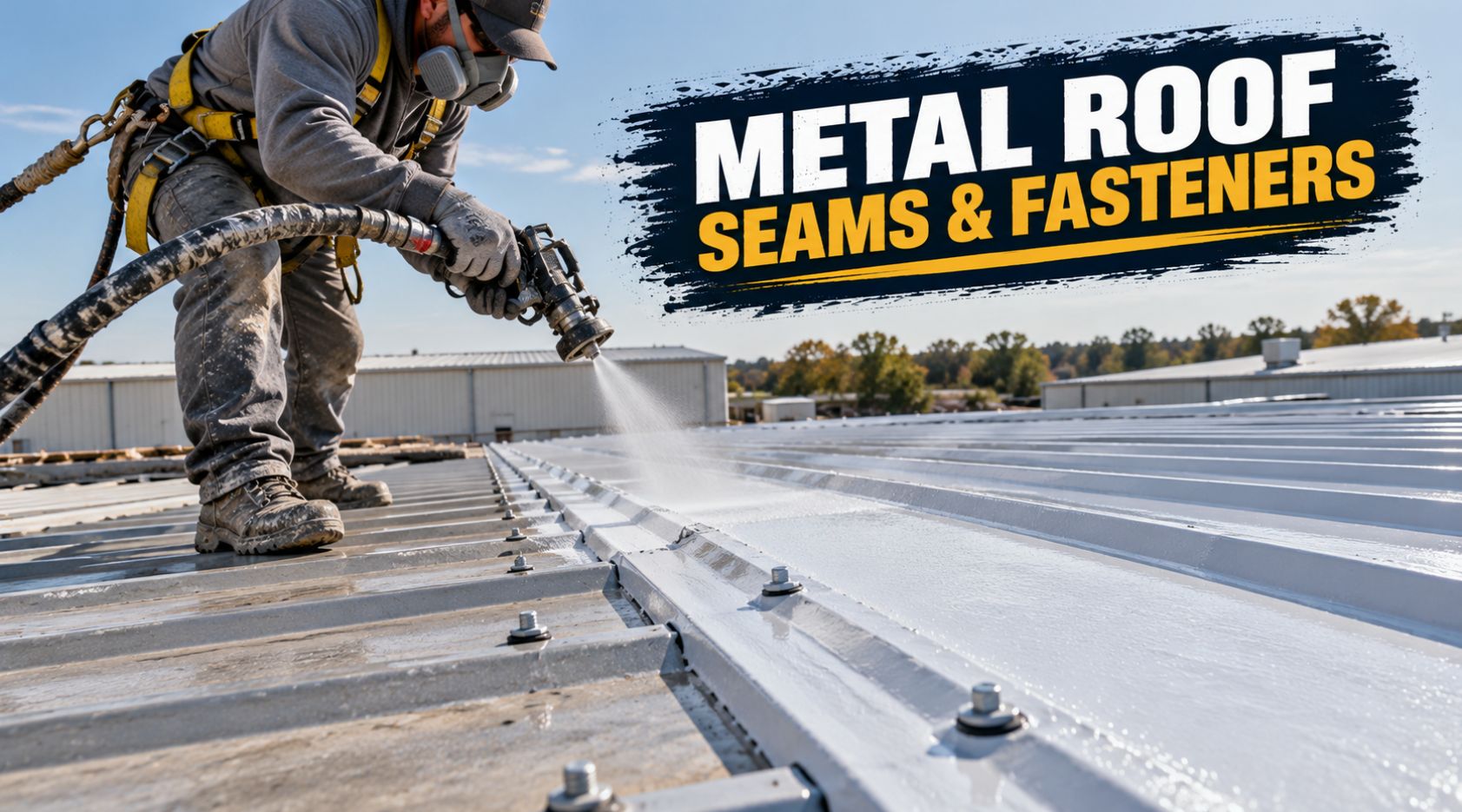
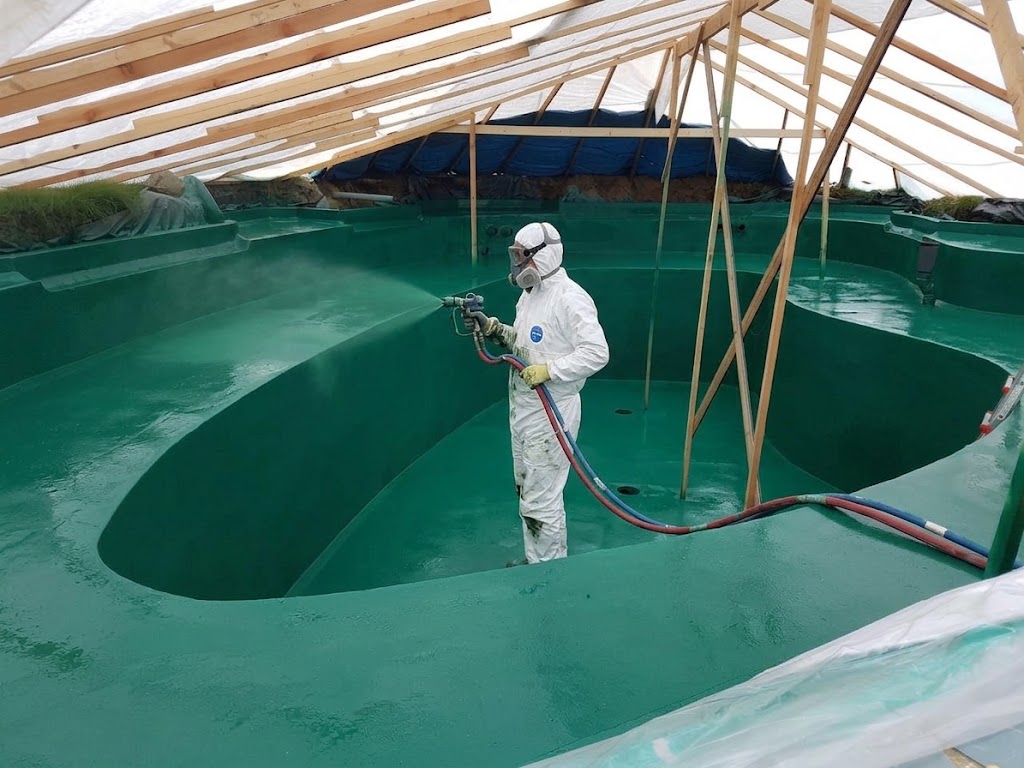
Spray polyurea with an aliphatic topcoat runs thicker, roughly forty to eighty mils, and returns the deck to service fast. On occupied multi-unit buildings, where every day of closure is a complaint, that return-to-service window is often the deciding factor rather than the data sheet.
Bonded sheet or liquid membranes under tile work when the owner wants tile, provided the slope is built into the substrate beneath them. Tile and grout are not waterproof. Every hairline crack in an unmembraned tile balcony is a leak path, and the honest fix means taking the tile up.
What actually consumes service life
Ultraviolet exposure, first. An aromatic backbone is excellent chemistry and poor sunlight resistance, so an exposed deck needs an aliphatic topcoat unless you enjoy explaining chalking to a board president.
Movement, second. Membranes do not fail in the open field. They fail at the sill, the wall junction, the rail post penetrations and the outer edge, because those are the places where the material has to turn a corner, stop against something, or let a bolt through.
And neglect, third. A topcoat refresh on schedule costs a fraction of a tear-off. Owners who budget for it get thirty years out of an assembly. Owners who wait for the stain in the ceiling below get a framing repair with a coating job attached.
Why domestic supply belongs in this conversation
Balcony remediation increasingly runs on a clock. Under California’s SB 721, an owner has 120 days from an inspection finding to complete repairs, and similar urgency shows up anywhere an engineer has put a structural note in writing.
A 120 day window does not accommodate a container sitting at anchor. American-made polyurea and polyurethane systems, formulated and blended domestically, ship in days rather than weeks, come with technical support in the same time zone, and leave a paper trail an engineer can actually follow back to a batch. For deadline-driven repair work, that is not patriotism. It is scheduling.
ArmorThane, manufacturing in Springfield, Missouri since 1989, publishes a thorough technical reference on polyurea balcony and deck coatings covering membrane classes, mil ranges, slope requirements and the sill and edge details that decide whether any of it lasts. It is a useful starting point for owners and specifiers alike.
Get polyurea news in your inbox
New articles, application guides and industry news from American Polyurea. Unsubscribe anytime.